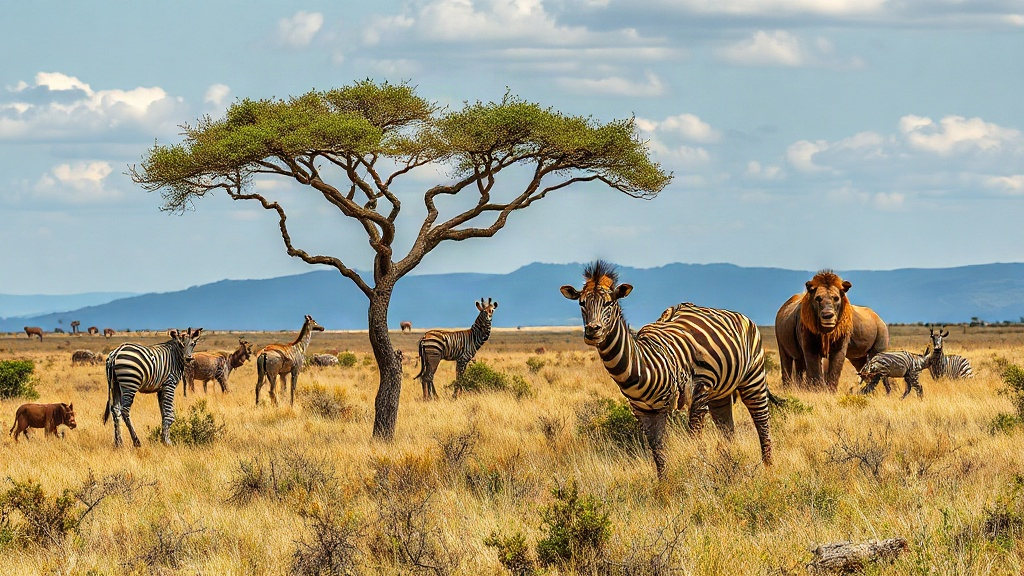
Savannah ecosystems—sometimes spelled savanna—are among the planet’s most iconic and dynamic landscapes. Stretching across continents from Africa to Australia and parts of the Americas, these grassland-woodland mosaics support high biodiversity, unique ecological processes, and livelihoods for millions of people.
Understanding how they function and how to protect them matters for biodiversity, climate resilience, and sustainable development.

What makes a savannah distinct is the balance between grasses and scattered trees or shrubs. That balance is shaped by a combination of seasonal rainfall, fire, and grazing.
Fires—often started naturally by lightning or managed by people—play a productive role by removing dead material, recycling nutrients, and limiting dense woody growth that would otherwise convert grasslands into closed-canopy forest. Large herbivores, from native grazers to domesticated livestock, also influence plant composition and nutrient cycling through selective feeding and movement.
Wildlife in savannahs attracts global attention: herds of grazers, predatory carnivores, and a wealth of bird and insect species form complex food webs. Beyond charismatic megafauna, savannah soils and grasses host a variety of pollinators, decomposers, and seed-dispersing animals that underpin ecosystem services such as soil fertility and water infiltration.
Savannahs are increasingly recognized for their role in climate regulation. While tree-dominated forests are commonly highlighted for carbon storage, savannahs store substantial carbon belowground in soils and in woody vegetation. Maintaining healthy savannahs through appropriate fire regimes and grazing management preserves these carbon pools and supports resilience to drought and extreme weather.
Threats to savannahs are multifaceted. Land conversion to agriculture and infrastructure fragments habitats and reduces connectivity for wide-ranging species. Changes in traditional fire management—either fire suppression or overly frequent burning—can shift the ecological balance, leading to bush encroachment or loss of grassland species. Invasive plants and unregulated grazing intensify degradation. Climate variability alters rainfall patterns and can increase the frequency of severe droughts and high-intensity fires, further stressing savannah systems.
Effective conservation and sustainable use are grounded in locally adapted approaches. Community-based natural resource management integrates traditional knowledge with scientific monitoring to maintain livelihoods while preserving biodiversity. Rotational grazing, set-aside conservation zones, and targeted controlled burns help maintain the grass-tree balance. Protecting corridors and stepping-stone habitats allows wildlife to move in response to seasonal and climatic changes, reducing local extinctions.
Restoration of degraded savannahs focuses on soil recovery, reestablishing native grasses, and controlling invasive species.
Passive restoration—allowing natural regeneration under reduced disturbance—often works well where seed banks remain intact. Active interventions such as reseeding native grasses, planting pioneer shrubs, and careful reintroduction of herbivores may be necessary in more heavily degraded areas.
For visitors and nature-based businesses, sustainable tourism can offer funding for conservation while promoting education and local employment. Responsible behavior—staying on designated routes, minimizing disturbance to animals, supporting local guides and enterprises—helps protect delicate savannah habitats.
Savannahs are living landscapes shaped by people and ecological processes.
Protecting them calls for flexible management that respects traditional practices, advances habitat connectivity, and addresses pressures from land-use change and climate variability.
Supporting local stewardship, science-guided interventions, and sustainable economic activities keeps savannahs productive and biodiverse for generations to come.