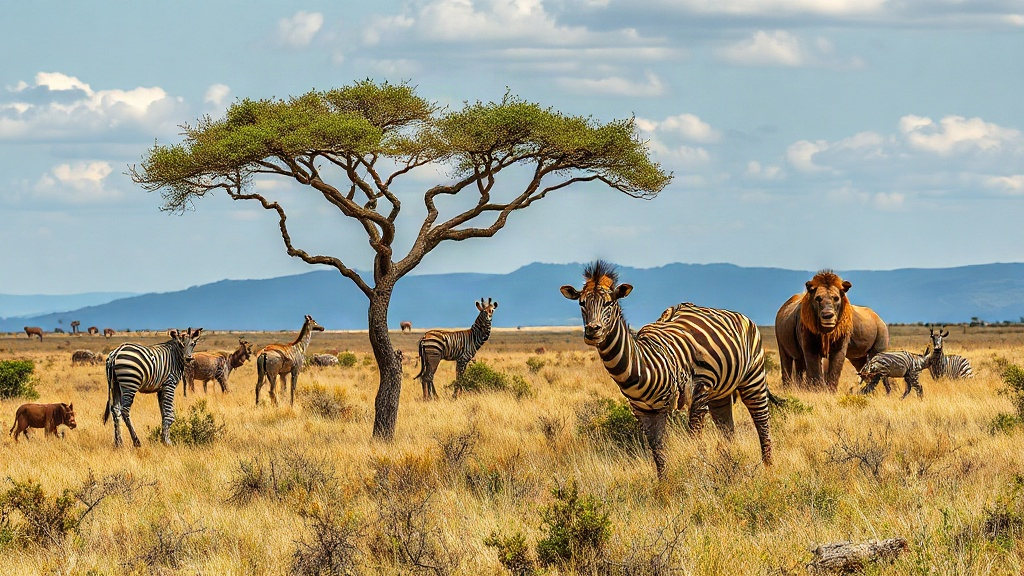
Savannahs: the open, sunlit grasslands that balance trees and turf, supporting iconic wildlife and crucial ecological functions. Whether in Africa, Australia, South America, or parts of Asia, savannahs remain some of the planet’s most dynamic and productive landscapes — shaped by fire, grazing, and seasonal rainfall.
What makes a savannah
A savannah is defined by a mix of grasses and scattered trees or shrubs. That balance depends on climate patterns, soil fertility, herbivore pressure, and fire frequency. Grasses dominate the understory and recover quickly after disturbance, while drought-tolerant trees provide shade, nesting sites, and a vertical structure that increases habitat complexity.
Key ecological roles
Savannahs host impressive biodiversity: large herbivores, small mammals, birds, pollinators, insects, and a suite of plant species adapted to variable water availability. Termite mounds and grazing lawns create microhabitats that boost plant diversity. Many large herbivores act as ecosystem engineers, shaping vegetation patterns and nutrient cycling. Deep-rooted grasses and tree roots help stabilize soils and store carbon — especially in the root systems and soils rather than in above-ground biomass.
Fire and grazing as natural forces
Fire is not inherently destructive in savannahs; it’s a regenerative force when it occurs at natural intervals and intensities. Regular, low-intensity fires remove accumulated dead grass, recycle nutrients, and prevent woody encroachment that could shift the landscape toward closed-canopy woodland. Grazing by wild herbivores and managed livestock complements fire by keeping grasses productive and facilitating seed dispersal. Combined, these processes maintain the open conditions many savannah species require.
Threats to savannahs
Conversion to cropland, expanding urban areas, and intensive ranching are the main drivers of savannah loss.
Invasive plant species and altered fire regimes can change community composition, reducing habitat quality for native wildlife. Climate variability — shifting rainfall patterns and increased drought frequency — adds pressure by stressing plants and disrupting established fire-grazing dynamics. Human-wildlife conflict also rises where large animals compete with livestock or damage crops.
Conservation and sustainable management
Effective savannah conservation blends protected areas with community-based approaches that recognize local livelihoods. Practical strategies include:
– Adaptive fire management: using early-season controlled burns to reduce fuel loads and prevent catastrophic late-season fires.
– Rotational grazing: aligning livestock movement with forage recovery periods to mimic natural grazing patterns.
– Restoration of degraded patches: reseeding native grasses, controlling invasives, and stabilizing soils.
– Community incentives: payments for ecosystem services and sustainable ecotourism that create economic value from intact savannahs.

The role of research and tourism
Ongoing ecological research clarifies how fire, grazing, and climate interact, guiding better management. Responsible tourism supports local economies and raises awareness, but it must be planned to minimize disturbance and avoid infrastructure sprawl.
How individuals can help
Support conservation groups that work directly with local communities, choose sustainable tourism operators, reduce food waste, and favor sustainably produced beef and dairy when possible. Even small actions can contribute to larger efforts to protect these open landscapes and the species that depend on them.
Savannahs are resilient yet vulnerable systems. With informed management that respects natural processes and community needs, these grasslands can continue to deliver biodiversity, cultural value, and ecosystem services for generations to come.