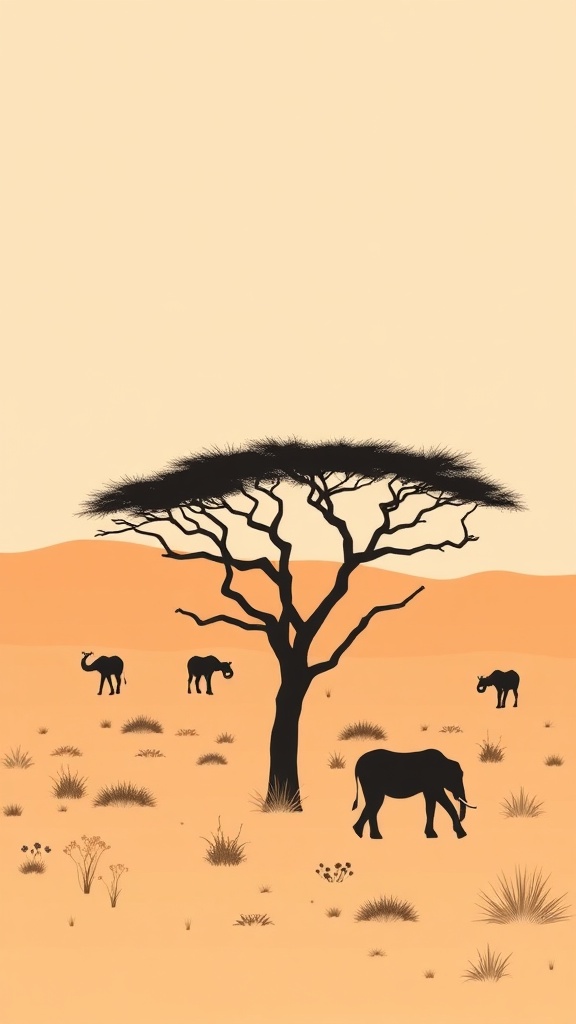
Savannahs (also spelled savannas) are among the world’s most iconic and productive ecosystems, blending wide-open grasslands with scattered trees to create habitats that support remarkable wildlife, cultural traditions, and essential ecosystem services.
Understanding how savannahs function and how people can help protect them matters for biodiversity, climate resilience, and local livelihoods.
What makes a savannah special
Savannahs are defined by a mix of grasses and trees where water availability, fire, and grazing interact to shape vegetation.
Unlike closed-canopy forests, savannahs maintain an open structure that allows sunlight to reach grasses while providing shade and food resources through sparse trees and shrubs. This structure supports large herds of grazers and their predators in some regions, and a wide range of adapted plants and insects elsewhere.
Key ecological processes
Fire and grazing are the savannah’s primary engineers. Periodic fires, often sparked by lightning or human activity, remove accumulated dead plant material, recycle nutrients, and prevent woody plants from taking over. Grazing animals—wild or domestic—create a mosaic of different grass heights that boosts plant diversity and creates microhabitats for smaller species. These dynamic processes have coevolved with local species, making many savannah systems highly resilient to disturbance when managed appropriately.
Why savannahs matter
– Biodiversity: Savannahs harbor unique assemblages of mammals, birds, reptiles, and plants adapted to open habitats and seasonal resources.
– Carbon storage: While not as carbon-dense as some forests, savannah soils and roots can store substantial carbon, especially under sustainable management.
– Human livelihoods: Millions of people rely on savannahs for grazing, agriculture, cultural practices, and tourism-based income streams.
– Flood control and soil protection: Grasses and root systems reduce erosion and help regulate hydrology across landscapes.
Threats and challenges
Savannahs face multiple pressures from land conversion to farming and infrastructure, unsustainable grazing regimes, invasive plant species, and altered fire regimes—either suppression or excessively frequent burns. Climate variability can exacerbate droughts or shift growing seasons, stressing both wildlife and human communities that depend on predictable patterns.
Conservation and smart management
Conservation today emphasizes working with local communities and traditional knowledge. Community-led fire management, rotational grazing, and habitat corridors help balance human use with ecological integrity. Protected areas remain important, but connecting fragments and supporting land-use approaches that maintain natural fire and grazing cycles are equally crucial. Payment-for-ecosystem-services schemes and responsible eco-tourism can provide financial incentives for conservation while supporting local economies.
How to support savannahs
– Learn about local conservation groups and contribute or volunteer where possible.
– Choose sustainable tourism operators that follow wildlife-friendly viewing practices.
– Support policies and products that encourage regenerative grazing and reduced deforestation.
– Participate in citizen science projects that monitor wildlife and fire patterns.

Savannahs are living landscapes shaped by cycles of fire, water, and grazing. Protecting them requires a balance between human needs and ecological processes, guided by science and local stewardship. Those who engage thoughtfully with savannah conservation help sustain both wildlife and the communities that depend on these open, vital ecosystems.